The Story Behind the MiMaji QR Code: How a Sticker Became Your Water Passport
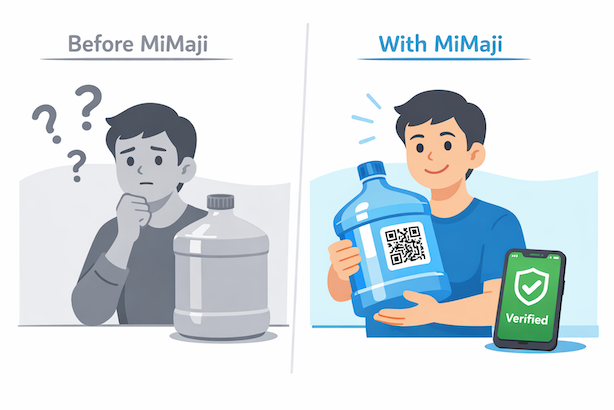
It started with a simple question that most Nairobi households ask at least once a week: “Where did this water actually come from?” If you have ever bought a 20-litre jug from a random vendor on the roadside, or accepted a refill at the office without knowing the source, you already know how unsatisfying the answer usually is. A shrug. A guess. A brand name that may or may not be real. We built the MiMaji QR code because that shrug should not be the final answer for something you and your family drink every day.
How the Idea Came About
The first version of MiMaji was not about QR codes at all. It was about delivery — getting clean, tested water to customers quickly and affordably. But very early on, a pattern emerged. Customers did not just want water delivered. They wanted proof. They wanted to know that the water inside the jug matched the promise on the outside. They would ask our riders questions like: “Which borehole did this come from?” “When was it filled?” “Is this really KEBS certified?”
We realised that trust cannot be verbal. In a market where counterfeit water is refilled into branded jugs and resold, verbal reassurance means very little. So we asked ourselves: what if every single jug carried its own unique digital identity? What if you could point your phone at a sticker and instantly see the complete journey of that water — the vendor, the source, the lab test results, the bottling date, and the KEBS status? That idea became the MiMaji QR code.
What the QR Code Actually Does
The MiMaji QR code is not a marketing gimmick. It is a full verification system printed on a sticker. When you scan it with your phone camera, a “Water Passport” opens inside the MiMaji app (or your browser) showing you everything we know about that specific jug:
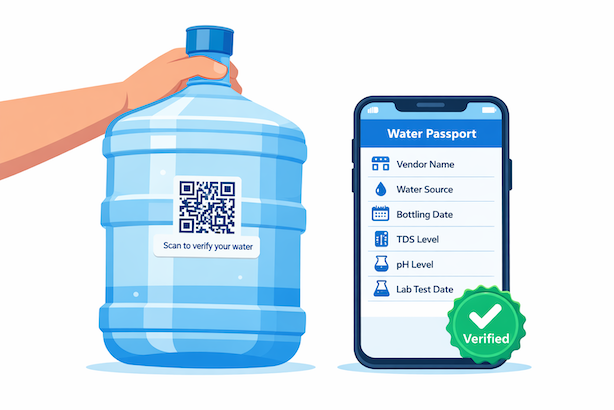
The information shown includes:
1. Vendor identity — the verified MiMaji partner who filled the jug, including their location and quality rating from other customers.
2. Water source — the specific borehole, treatment plant, or approved source the water came from.
3. Lab test results — pH, TDS (total dissolved solids), turbidity, bacterial counts, and any heavy metal testing relevant to the batch.
4. KEBS certification status — whether the vendor holds a current KS EAS 153 certification and the last audit date.
5. Bottling date and batch number — so you can see how fresh the water is and whether it has been stored correctly.
How It Works, Step by Step
The process is designed to be fast. You do not need to install anything special. You do not need to create an account to scan. You just need a phone camera and two seconds of your time.
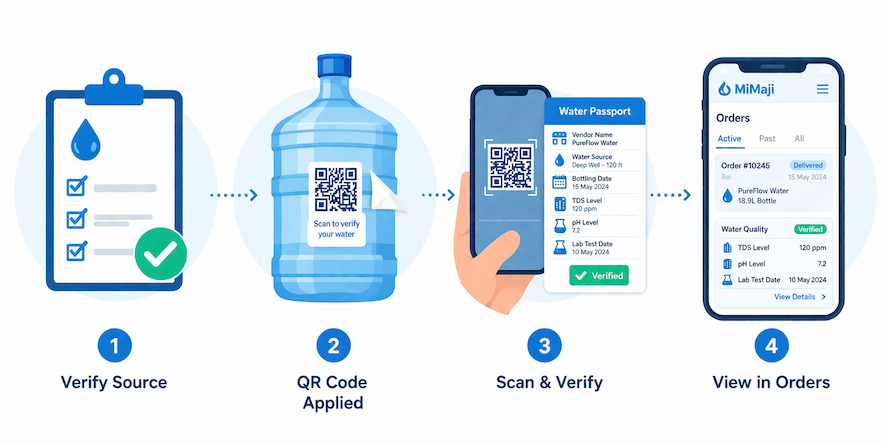
Step 1: Find the sticker. Every MiMaji jug and bottle carries a branded QR sticker on the label. It is usually on the front near the cap.
Step 2: Open your phone camera and point it at the code. Your phone will recognise it automatically and offer to open a link. Tap the link.
Step 3: The Water Passport loads. You see the vendor, source, lab results, and certification. If anything looks wrong, you can report it directly from the same page and our quality team investigates within 24 hours.
Why This Matters for Nairobi
Nairobi has a water trust problem. The city’s tap water is rationed and often contaminated after it leaves the treatment plant. Informal vendors sell refilled jugs with no testing. Even branded water is sometimes counterfeited. In that environment, a label on the jug is worth very little. What customers actually need is a way to verify, in real time, that the water they are about to drink is what the vendor claims it to be.
The MiMaji QR code gives every Nairobi household that power. It turns a passive jug of water into an auditable, traceable product. It forces vendors to be honest because any customer can verify the claim in seconds. And it gives parents, office managers, and anyone responsible for the water their people drink a way to make informed decisions — not guesses.
What Comes Next
We are working on two big upgrades. First, a tamper-evident sticker that changes colour if the jug has been refilled by an unauthorised vendor. Second, an in-app community score where customers can rate their experience with each specific batch, so the MiMaji network becomes self-policing. The QR code started as a way to prove where the water came from. It is becoming a full-fledged trust layer for the Nairobi water market.
If you have not scanned a MiMaji QR code yet, the easiest way to try it is to order your first jug. Every single delivery includes a sticker. Point your camera, see the Water Passport, and drink with confidence. That is the whole point.
Order Clean Water Today
KEBS-certified, lab-tested water delivered to your door. Pay via M-Pesa.
Order Water Now