The Real Cost of Water in Nairobi: What Every Estate Pays (2026 Prices)
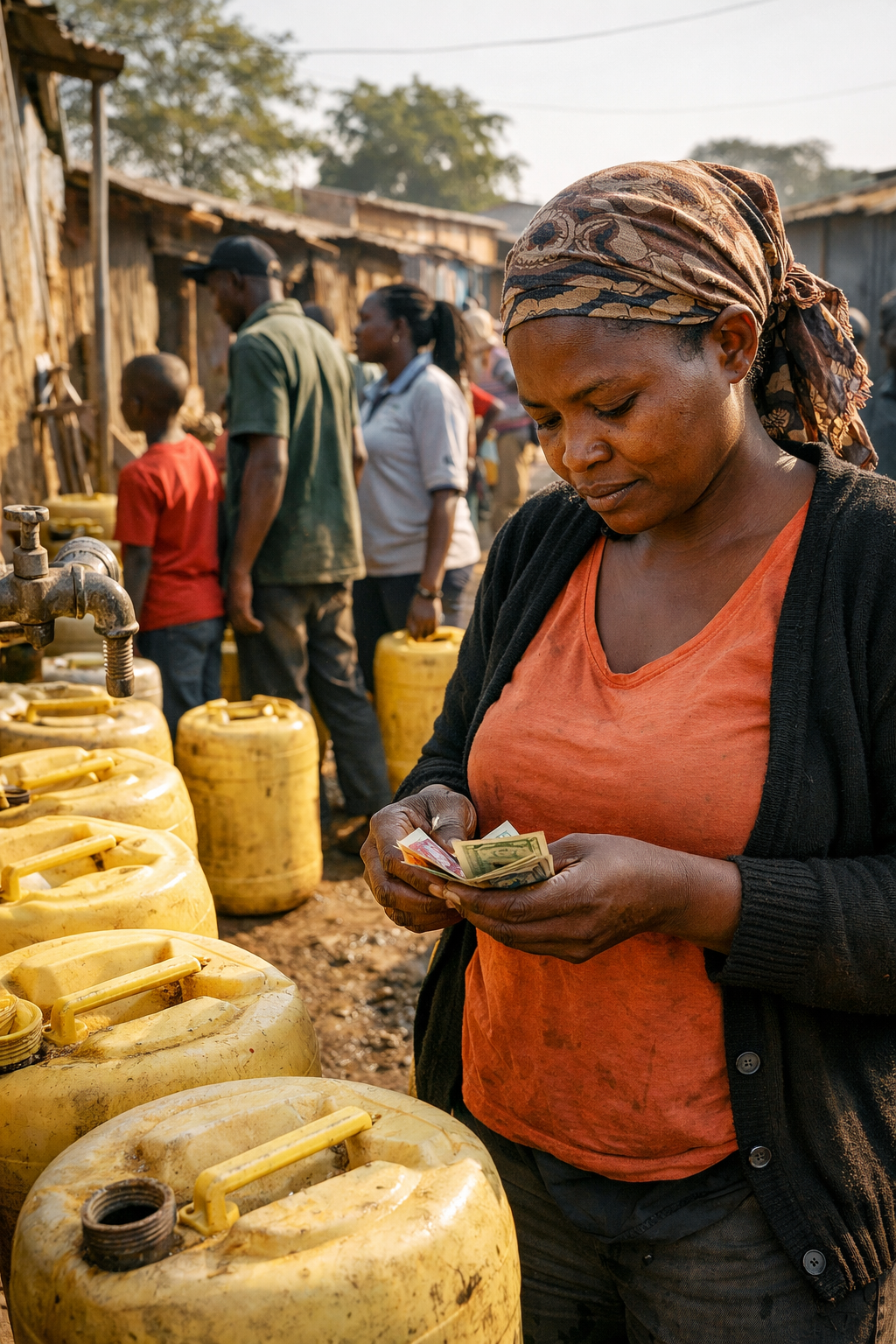
Water is supposed to be a basic human right. Article 43(d) of Kenya’s Constitution guarantees every citizen the right to clean and safe water in adequate quantities. But in Nairobi, the price you pay for water depends almost entirely on your postcode. A family in Runda might pay KSh 2 per 20 litres from their municipal connection. A family in Kibera might pay KSh 50 to KSh 100 for the same amount from a vendor. That is a 25-to-50-fold difference for the same basic necessity.
This blog presents the real, current prices that Nairobi residents pay for water across different estates and through different channels. The data comes from field surveys, NCWSC published tariffs, WASREB reports, and first-hand accounts from MiMaji’s supplier network.
Understanding the Water Pricing Channels
To understand Nairobi’s water prices, you first need to understand the different ways water reaches households. Each channel has a different cost structure, quality level, and reliability profile.
Channel 1: NCWSC Piped Connection
If you are lucky enough to have a working Nairobi City Water and Sewerage Company (NCWSC) connection, this is the cheapest source. NCWSC’s approved tariff structure charges residential customers on a tiered basis: the first 6 cubic metres per month are charged at the lowest rate, with prices increasing for higher consumption. For a household using 10 to 15 cubic metres per month, the effective cost works out to approximately KSh 2 to KSh 5 per 20-litre equivalent.
The catch: NCWSC supply is intermittent in most areas. Many estates receive water only 2 to 3 days per week. Some, like Ngumo Nera Estate, have reported no water since January 2026, prompting the Ombudsman to demand an explanation from NCWSC.
Channel 2: Water Kiosks and ATMs
Water kiosks (including Jibu franchise points, Susteq ATMs, and NCWSC community standpipes) are the next cheapest option. Prices typically range from KSh 5 to KSh 15 per 20 litres, depending on location and operator. The water is usually treated and of reasonable quality, but you must physically travel to the kiosk, queue (often for 30 minutes or more), and carry the heavy jug home.
Channel 3: Borehole Water
Many estates, particularly in satellite areas like Ruiru, Kitengela, and parts of Eastlands, rely on private boreholes. A 20-litre jerrycan from a borehole vendor costs KSh 10 to KSh 30. However, borehole water quality is highly variable. Without regular testing, borehole water may contain elevated fluoride, nitrates (from proximity to pit latrines), or bacterial contamination.
Channel 4: Vendor-Delivered Water (Boda Boda / Handcart)
This is where prices spike dramatically. Water vendors using handcarts or boda bodas charge KSh 30 to KSh 100 per 20-litre jerrycan, depending on the estate, distance, and level of scarcity. During water shortages, prices can double or triple. In March 2026, with the Outering Road pipeline damaged by floods, residents in affected estates reported vendors charging up to KSh 100 per jerrycan.
Channel 5: Branded Bottled/Purified Water (20L Jugs)
Branded 20-litre water jugs from companies like Highland, Keringet, Aquamist, or local purifiers cost between KSh 150 and KSh 350 per jug. These are KEBS-certified and offer the highest quality assurance, but the price puts them out of reach for daily household use for most Nairobi families.
Estate-by-Estate Price Comparison: What You Actually Pay
Here is a detailed breakdown of current water prices across Nairobi’s major residential areas:
| Estate / Area | NCWSC Supply? | Typical Price per 20L | Primary Source | Notes |
|---|---|---|---|---|
| Runda / Muthaiga | Yes (reliable) | KSh 2–5 | NCWSC piped | Boreholes as backup; rarely buy vendor water |
| Karen / Lang’ata | Yes (intermittent) | KSh 5–15 | NCWSC + borehole | Many homes have own boreholes |
| Kilimani / Kileleshwa | Yes (intermittent) | KSh 5–20 | NCWSC + kiosk | Water tanks buffer supply gaps |
| Westlands / Parklands | Yes (intermittent) | KSh 10–25 | NCWSC + vendors | Affected by Sasumua shutdowns |
| South B / South C | Intermittent | KSh 15–40 | Kiosk + vendors | Growing vendor dependence |
| Umoja / Kayole | Intermittent | KSh 20–50 | Kiosk + boda vendor | Frequent rationing |
| Buruburu | Intermittent | KSh 20–60 | Kiosk + vendor | Severely hit by March 2026 floods |
| Roysambu / Kasarani | Intermittent | KSh 20–50 | Borehole + vendor | Borehole quality concerns |
| Dandora / Kariobangi | Intermittent/None | KSh 30–80 | Vendor + kiosk | Infrastructure frequently damaged |
| Eastleigh | Intermittent | KSh 30–70 | Vendor | Dense population, high demand |
| Mathare | Rare | KSh 30–100 | Vendor + illegal tap | Informal connections; quality unknown |
| Kibera | Rare | KSh 50–100 | Vendor + kiosk | Highest per-litre cost in the city |
| Korogocho | Rare | KSh 40–100 | Vendor | Pipeline damage; price spikes common |
| Ruiru / Juja | Limited NCWSC | KSh 15–40 | Borehole + tanker | Borehole-dependent; quality variable |
| Kitengela / Ongata Rongai | No NCWSC | KSh 20–50 | Borehole + tanker | No municipal supply at all |
The Inequality Math: The Poorest Pay the Most
The data reveals a cruel irony that defines Nairobi’s water landscape: the poorest residents pay the most for water. A family in Runda with a reliable NCWSC connection pays roughly KSh 2 per 20 litres. A family in Kibera pays KSh 50 to KSh 100 for the same volume from a vendor. That means a Kibera family pays 25 to 50 times more per litre than a Runda family.
Put another way: if a Kibera family of four uses the recommended minimum of 200 litres per day (10 jerrycans), they could spend KSh 500 to KSh 1,000 per day on water alone. That is KSh 15,000 to KSh 30,000 per month — a catastrophic expense for families earning KSh 15,000 to KSh 30,000 total.
This is not just a pricing problem. It is a poverty trap. Families who cannot afford vendor prices during shortages reduce their water consumption to dangerous levels. They skip handwashing, reuse cooking water, or drink from unverified sources. The health consequences — typhoid, diarrhoea, skin infections — then create additional medical costs that push them further into poverty.
What Drives the Price Spikes?
Water prices in Nairobi are not static. They fluctuate based on several factors:
Supply interruptions are the primary driver. When NCWSC announces a shutdown (like the February 2026 Sasumua Dam maintenance or the March 2026 flood-related pipeline breaks), vendor prices in affected areas can double within hours. Vendors know that desperate families will pay.
Seasonality also plays a role. During dry seasons, borehole yields drop, kiosks run out faster, and competition for available water intensifies. During floods, paradoxically, treatment plants shut down and pipes break, creating shortages even as water surrounds residents.
Distance from water source matters. Vendors charge a premium for delivery distance. An estate that is 2 kilometres from the nearest kiosk will pay significantly more than one adjacent to a water point.
Cartel activity inflates prices in some areas. Investigations have revealed organised water cartels that control supply in certain informal settlements, deliberately restricting supply from community water points to force residents to buy from their own vendors at inflated prices.
How MiMaji Is Standardising Water Prices Across Nairobi
MiMaji was built to break this inequality. On the MiMaji platform, the price you pay for a 20-litre jug of clean, KEBS-certified water does not depend on which estate you live in. We work directly with verified suppliers to negotiate fair, transparent pricing that is the same whether you are in South B or Roysambu, Umoja or Buruburu.
By connecting customers directly with certified suppliers and handling delivery through our GPS-tracked rider network, MiMaji eliminates the middlemen and vendor cartels that inflate prices during shortages. You see the price before you order, pay via M-Pesa, and track your delivery in real time.
For families currently paying KSh 50 to KSh 100 per jerrycan from vendors, switching to MiMaji can save hundreds or even thousands of shillings per month while guaranteeing water quality that unregulated vendors simply cannot match.
Order Clean Water Today
KEBS-certified, lab-tested water delivered to your door. Pay via M-Pesa.
Order Water Now