Is Nairobi Tap Water Safe to Drink in 2026? What the Data Actually Says
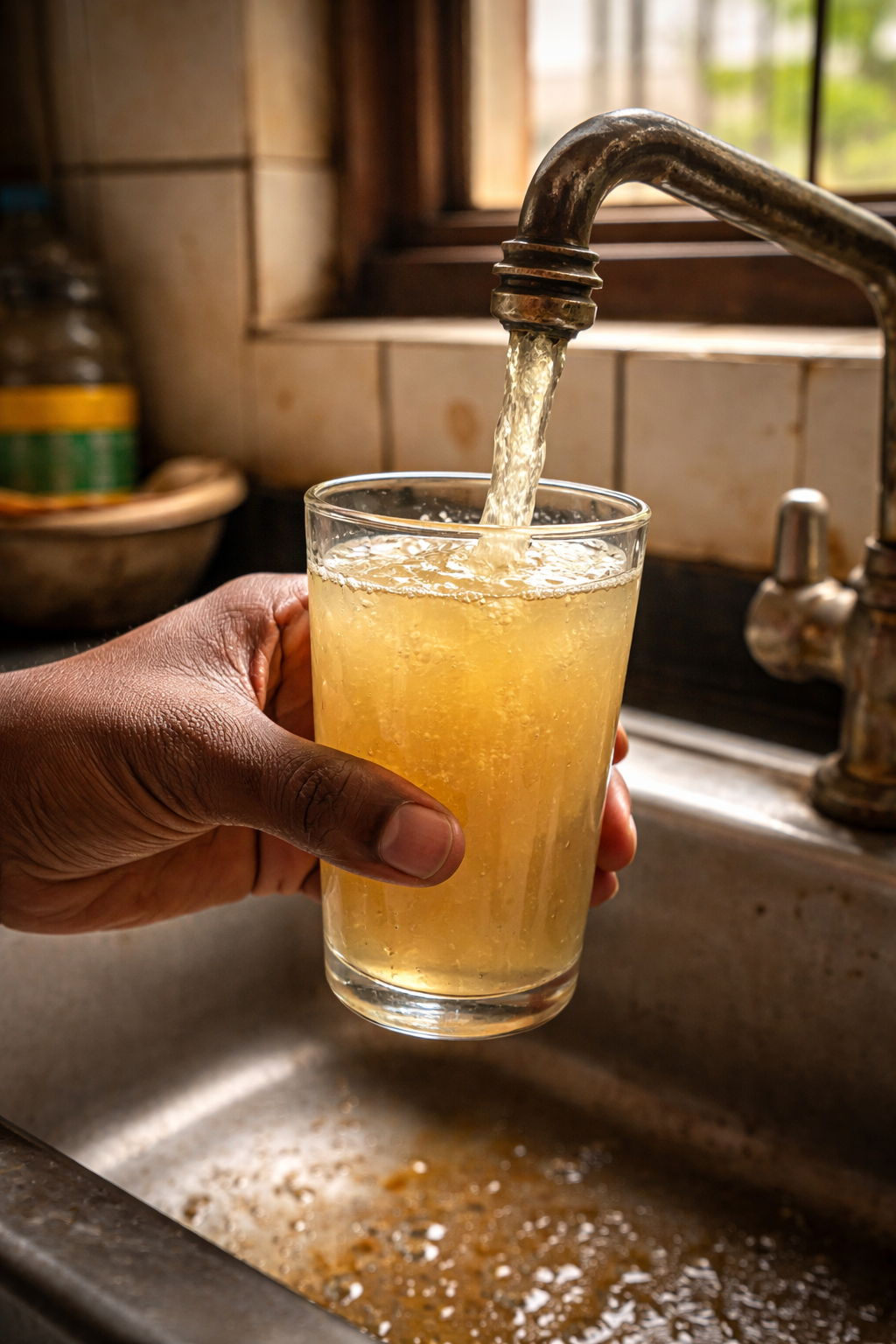
If you live in Nairobi, you have probably asked yourself this question at least once: can I drink the water from my tap? The answer, like most things in this city, is complicated. It depends on where you live, when you turn on the tap, and whether the water has actually been treated before it reaches your glass. In this blog, we break down the real data so you can make an informed decision about the water your family drinks every day.
Nairobi’s Water Supply: The Basics
Nairobi’s water comes primarily from three sources: the Thika Dam system (which includes the Ndakaini Dam, supplying about 85% of the city’s treated water), the Sasumua Dam in Nyandarua County (contributing roughly 11%), and the Ruiru Dam. The raw water from these sources is treated at the Ng’ethu Water Treatment Plant and then pushed through hundreds of kilometres of distribution pipes to reach homes across the city.
Here is the fundamental problem: Nairobi’s daily water demand has ballooned to over 900 million litres per day, while the available supply sits at approximately 525 million litres. That is a deficit of nearly 375 million litres every single day. This gap means that water is rationed, with many estates receiving piped water only a few days per week — or not at all.
What the KEBS Standards Say About Drinking Water
The Kenya Bureau of Standards (KEBS) has established clear standards for potable (drinking) water under KS EAS 153. These standards set maximum allowable limits for a range of parameters including turbidity, pH levels, bacterial contamination (E. coli, total coliforms), heavy metals (lead, arsenic, cadmium), and chemical residues. The standards align closely with World Health Organization (WHO) guidelines but are adapted for Kenyan conditions.
For water to be considered safe for human consumption under KEBS standards, it must meet all of the following minimum thresholds:
| Parameter | KEBS Maximum Limit | WHO Guideline | What It Means |
|---|---|---|---|
| Turbidity | 5 NTU (max 25 NTU) | < 1 NTU ideal | Cloudiness of water; high turbidity can hide bacteria |
| pH | 6.5 – 8.5 | 6.5 – 8.5 | Acidity level; outside range corrodes pipes |
| E. coli | 0 per 100ml | 0 per 100ml | Presence means fecal contamination |
| Total Coliforms | 0 per 100ml | 0 per 100ml | Indicator of overall bacterial contamination |
| Lead | 0.01 mg/L | 0.01 mg/L | Toxic heavy metal from old pipes |
| Residual Chlorine | 0.2 – 0.5 mg/L | 0.2 – 5 mg/L | Disinfection; too little = bacteria survive |
| Total Dissolved Solids | 1,500 mg/L max | 1,000 mg/L | Overall mineral/salt content |
When water leaves the Ng’ethu Treatment Plant, it generally meets these standards. The problem is what happens between the treatment plant and your tap.
The Journey from Treatment Plant to Your Glass: Where Contamination Happens
Nairobi’s water distribution network is old. Some pipes date back to the colonial era — over 60 years old. These aging pipes are prone to cracks, leaks, and corrosion. When a pipe cracks underground, two things happen: treated water leaks out (contributing to the 40% or more of “non-revenue water” that NCWSC loses), and contaminants from the surrounding soil can seep in.
The contamination risk increases dramatically in several scenarios:
First, during water rationing. When NCWSC turns off supply to an area, the pressure in the pipes drops to zero. This creates negative pressure that can suck soil, sewage, and groundwater into the pipes through cracks and joints. When supply resumes, this contaminated water is pushed into homes alongside the treated water. Residents often notice brown, murky water for the first few minutes after supply returns — this is not just “rust,” it is contamination.
Second, during floods and heavy rains. The March 2026 floods in Nairobi provide a stark example. Heavy downpours damaged the major transmission pipeline along Outering Road, which supplies water to over 15 estates including Buruburu, Kariobangi, Dandora, Mathare, Eastleigh, and Korogocho. Floodwater carrying sewage, debris, and soil overwhelmed the broken pipes. Even after repairs, the flushing process takes days, and contaminated water can persist in the system.
Third, through illegal connections. Water cartels and individuals illegally tap into main distribution lines using crude methods that breach the pipe’s integrity. These connections are rarely sealed properly, creating permanent entry points for contamination. In informal settlements, illegal connections may run alongside or even through open sewage channels.
Estate-by-Estate Reality: Not All Nairobi Water Is Equal
Water quality in Nairobi varies enormously depending on where you live. Estates closer to the main treatment works and on newer distribution networks (such as parts of Westlands, Kilimani, and Kileleshwa) tend to receive better-quality water. Estates further from treatment plants, on older pipe networks, or in informal settlements face significantly worse quality.
Recent studies and NCWSC data suggest the following patterns:
| Area Type | Examples | Typical Water Quality | Key Risks |
|---|---|---|---|
| Newer/Central Estates | Kilimani, Kileleshwa, Lavington | Generally meets KEBS standards when available | Quality drops during rationing; intermittent supply |
| Older Eastlands Estates | Buruburu, Umoja, Dandora, Komarock | Variable; frequent turbidity issues | Aging pipes; affected by March 2026 flood damage |
| Informal Settlements | Kibera, Mathare, Korogocho, Mukuru | Often fails KEBS standards | Illegal connections near sewage; no residual chlorine; vendor water unregulated |
| Satellite Towns | Ruiru, Kitengela, Ongata Rongai | Mostly borehole-dependent | Fluoride, nitrates, bacterial contamination from pit latrines |
The Health Consequences: What Contaminated Water Does to Your Family
Drinking contaminated water is not a minor inconvenience — it is a serious health risk. Kenya reports thousands of typhoid fever cases annually, with Nairobi being a consistent hotspot. Cholera outbreaks continue to occur, particularly in informal settlements where water and sanitation infrastructure is weakest. Dysentery, hepatitis A, and parasitic infections (cryptosporidium, giardia) are all transmitted through contaminated water.
Children under five are the most vulnerable. The World Health Organization estimates that diarrheal diseases — most of which are caused by contaminated water — are the second leading cause of death in children under five globally. In Nairobi’s informal settlements, where families rely on unregulated water vendors, the risk is compounded by the use of unsanitary storage containers.
Even in middle-class estates, the health cost of intermittent water supply is real. A study in Nairobi found that households in areas with intermittent supply reported significantly more gastrointestinal illness than those with continuous supply — even when the source water was technically treated.
So, Is It Safe to Drink? The Honest Answer
The honest answer is: it depends, and you should not assume it is safe.
If you live in a well-maintained estate with relatively new pipes and you have continuous (not rationed) water supply, your tap water is more likely to meet KEBS standards. But even then, the only way to be certain is to have it tested.
If you experience intermittent supply (which is the reality for most Nairobians), your tap water is at higher risk of contamination every time supply resumes. The first water that comes through after a dry spell is almost certainly compromised.
If you live in an informal settlement or rely on water from vendors, boreholes, or tankers, you should treat all water before drinking — or better yet, source it from KEBS-certified suppliers.
What You Can Do: Practical Steps to Protect Your Family
Step one: If you use tap water for drinking, boil it. Bringing water to a rolling boil for at least one minute kills virtually all bacterial and viral pathogens. This is the simplest and most effective treatment method available to any household.
Step two: Use water treatment products. WaterGuard (sodium hypochlorite solution) is widely available in Nairobi supermarkets and dukas. It costs approximately KSh 30–50 and treats hundreds of litres. Follow the instructions on the bottle: typically 1 capful per 20 litres, wait 30 minutes before drinking.
Step three: If you can afford it, invest in a household water filter. Ceramic filters (like those made by Aqua Clara Kenya) cost between KSh 3,000 and KSh 8,000 and remove bacteria and turbidity effectively. Reverse osmosis systems provide the highest level of purification but cost KSh 15,000 or more.
Step four: Order from verified, KEBS-certified water suppliers. This is where MiMaji comes in. Every supplier on the MiMaji platform is required to hold a valid KEBS Standardization Mark. We verify their Public Health Hygiene License, Medical Certificates, County Business License, and water quality test results. Suppliers who fail quarterly quality audits are immediately removed from the platform.
Step five: Never store drinking water in containers previously used for chemicals, oil, or other non-food substances. Use food-grade containers, keep them covered, and replace stored water every 48 to 72 hours.
How MiMaji Ensures Your Water Is Safe
MiMaji was built specifically to solve the trust problem in Nairobi’s water supply chain. When you order through MiMaji, you are not getting water from an unknown vendor with a handcart and questionable source. You are getting water from a verified, KEBS-certified supplier whose treatment facility has been inspected, whose water has been lab-tested, and whose hygiene practices have been confirmed.
Every MiMaji delivery comes with transparency: you can see which supplier filled your jug, their KEBS certification status, and their quality rating from other customers. If any delivery does not meet your expectations, our quality guarantee ensures a replacement within 24 hours.
In a city where the tap is unreliable and the vendor is unverified, MiMaji gives you certainty. Clean water, tested water, delivered to your door, paid via M-Pesa. No queuing, no guessing, no risk.
Order Clean Water Today
KEBS-certified, lab-tested water delivered to your door. Pay via M-Pesa.
Order Water Now